……And Why It Matters More Than You Think!
When you’re learning the flute, it’s not just your embouchure, your fingers, or your breath doing the work — your brain is in charge of everything. And goodness me, it has a lot to say.
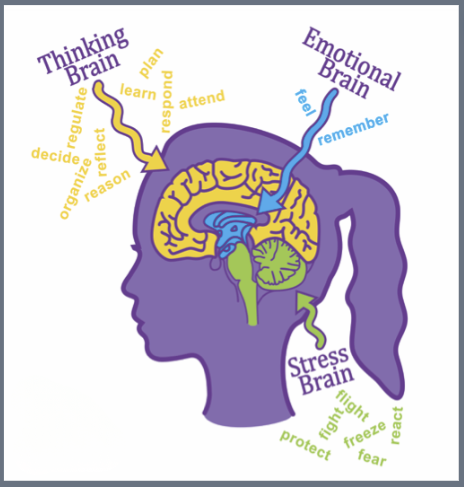
To keep things simple, let’s imagine we’re working with just three “parts” of the brain. (Yes, there are more, but this will do nicely.)
- The Panic Brain — The Amygdala
Ah yes… that dramatic little almond-shaped thing.
This is your fight-or-flight system.
It speeds up your breath, makes your heart race, gets you sweaty, wobbly, and convinced that the world is ending.
In flute playing, when does this activate?
Stage fright
Seeing a page full of semiquavers
Worrying you “can’t” get the high notes
Feeling unprepared or judged in a lesson
And how helpful is the panic brain for flute technique?
Not. At. All.
You don’t need adrenaline to play beautifully. You’re not being chased by a lion. It’s just a lesson, and nothing bad is going to happen.
- The Thinking Brain — The Prefrontal Cortex
This is the part I want you to use the most in your lessons.
It’s your:
Logic
Analysis
Planning
Step-by-step technique
Reflection
“Let me try that again” problem-solver
This is where you shape your embouchure, organise your fingers, make a plan for the breathing, and think through the musical phrase.
If you want clean semiquavers or confident high notes, this is your best friend.
- The Memory & Emotion Brain – The Hippocampus
This includes the areas involved in memory and emotional connection. This is where your long-term musical habits and emotional expression live.
When you practise something repeatedly — long tones, scales, that tricky semiquaver passage — eventually it moves from “thinking” to “remembered.”
That’s when your playing becomes:
Automatic
Free
Natural
Expressive
But — and this is important — you can only play naturally once the thinking stage has happened first.
Why Being Stressed Makes It Harder to Learn
If your panic brain is switched on, your thinking brain can’t do its job. You literally can’t reason, analyse, or make good decisions when you’re stressed. It’s like trying to tune your flute during an earthquake.
That’s why I go on (lovingly!) about relaxation.
When you’re calm, you can think.
When you can think, you can learn.
When you learn, you can grow.
And when you grow, your music becomes freer, easier, and more expressive.
So What Part of Your Brain Should You Use in Your Lessons?
Your thinking brain — your prefrontal cortex.
We’re going to use it for:
Analysing technique
Understanding how to form your embouchure
Planning finger shapes
Working out your breathing strategy
Breaking tricky passages into small steps
Later, once you’ve repeated these skills enough times, everything will feel natural and instinctive. That’s when your memory and emotion brain comes in and lets you play with heart.
But the thinking comes first. Always.